Mon–Fri 9:00 am–1:00pm · 3:00pm–6:00pm · +39 0577 983064



Reducing emissions where the impact can be greatest.
In many countries, landfills are still managed without adequate systems for capturing and treating biogas.
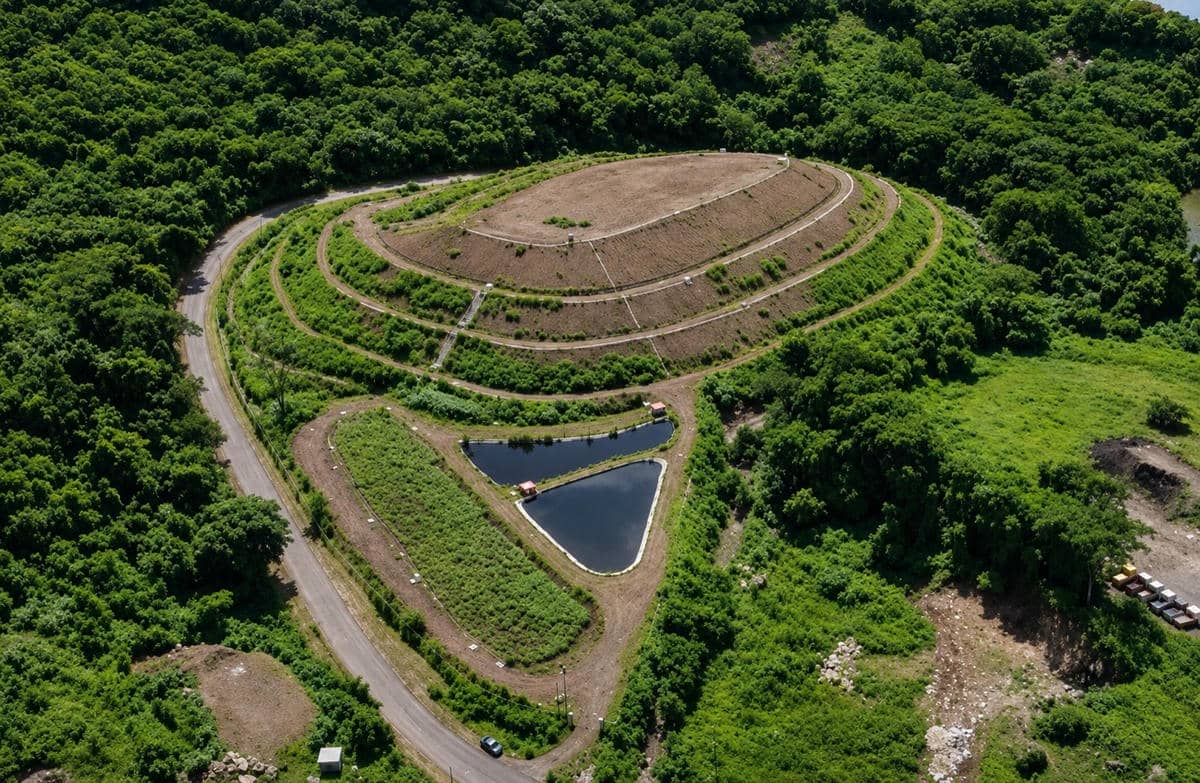
EXE develops projects for new landfill construction, as well as the redevelopment and revamping of existing sites, by introducing infrastructure for capture, treatment, control, and monitoring—all aimed at achieving a measurable reduction in greenhouse gas emissions.
The process
From baseline to carbon credits, in five stages.
Each stage generates data and documentation that serve as the foundation for the next, ultimately leading to a verifiable environmental outcome.
01
Site analysis and baseline definition
Every project begins with an understanding of the initial conditions.
EXE analyzes the landfill configuration, the waste deposited, the state of existing infrastructure, the potential biogas production, and the methods by which gas is currently captured or released.
This information makes it possible to define a reference scenario—or “baseline“—against which the results achieved by the project will subsequently be measured.
02
Design and Revamping
The technical design for the project is developed based on the specific characteristics of the site.
Activities may include the installation of new extraction wells, primary and secondary piping networks, substations, suction systems, flares, and biogas treatment and utilization facilities, as well as the integration of monitoring and automation technologies.
For existing landfills, EXE assesses which components can be recovered, modified, or upgraded, developing a revamping plan aligned with the project’s environmental and economic objectives.
03
Performance monitoring
The results achieved are compared against the baseline scenario.
The difference between the emissions projected in the baseline scenario and those associated with the new management scenario makes it possible to determine the greenhouse gas reduction resulting from the intervention.
The objective is to translate a technical improvement to the facility into a quantifiable and documentable environmental outcome.
04
Quantification of emission reductions
Biogas captured by wells is collected via a network and transferred to facilities for extraction, combustion, treatment, or energy recovery.
EXE verifies the quantity and quality of the extracted gas and analyzes the performance of the facility’s key components: wells, primary and secondary lines, substations, extraction units, flares, and energy recovery systems.
Comparing the production potential, the actual amount captured, and the gas utilized allows for the identification of any inefficiencies throughout the process chain.
05
Carbon Credits
When project characteristics and the applicable methodology permit, the verified emission reductions can be incorporated into a framework aimed at generating carbon credits.
This process requires structured documentation—covering the project, the baseline, the activities implemented, and the measured results—as well as the subsequent verification and certification phases mandated by the adopted standard.
Carbon credit is not the starting point. It is the result of a real and measurable reduction in emissions.
EXE integrates design, technologies, monitoring, and environmental expertise to develop projects capable of delivering concrete results for both the facility and the climate.
Design
Technologies
Monitoring
Environmental expertise
Let’s talk about your facility.
Our team is available to analyze the characteristics of the site and identify the most suitable technological, design or consultancy solution.